
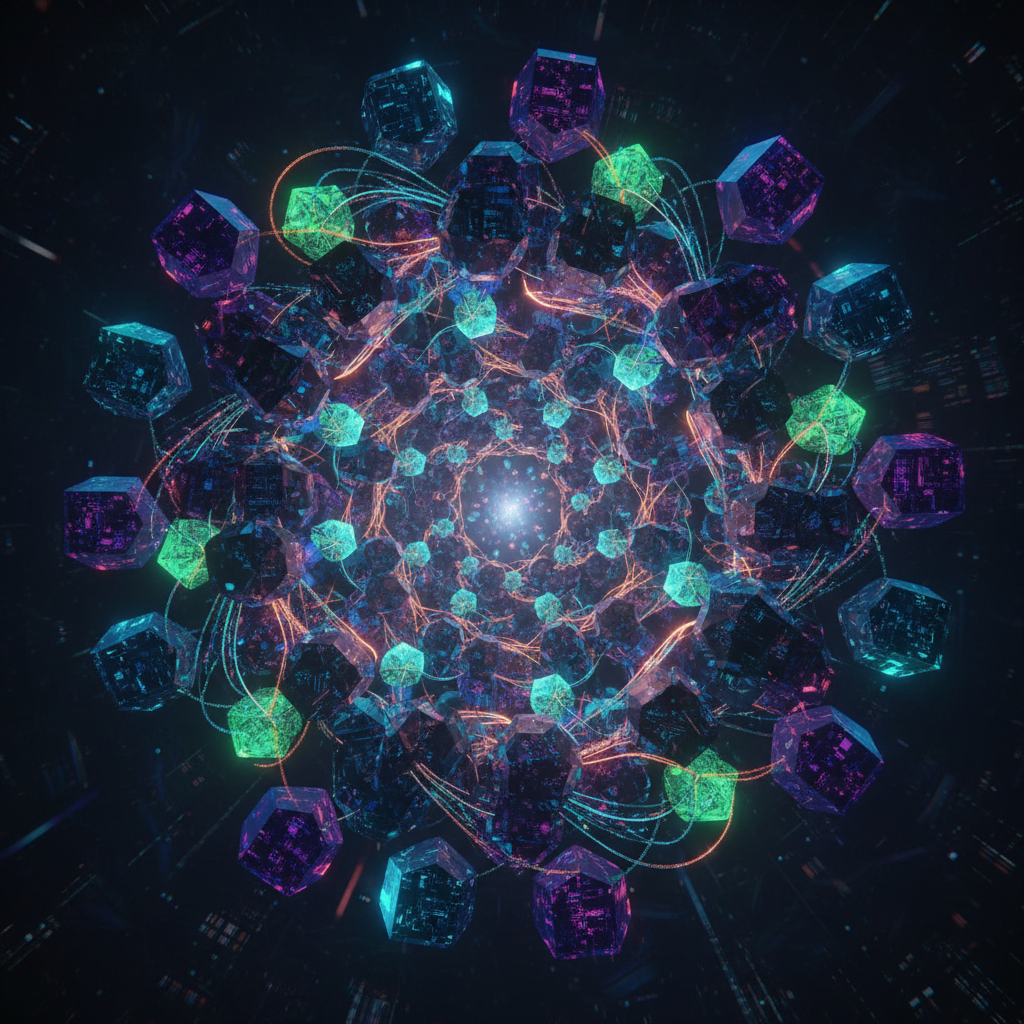
The Dawn of Quantum Computing: A New Era of Calculation
Quantum computing, once a concept relegated to the realms of science fiction, is rapidly transitioning into a tangible reality. This revolutionary field harnesses the principles of quantum mechanics to perform calculations far beyond the capabilities of even the most powerful classical supercomputers. Unlike classical computers that store information as bits—either a 0 or a 1—quantum computers utilize “qubits.” Qubits can exist in multiple states simultaneously, a phenomenon known as superposition, allowing them to process vast amounts of information in parallel. This fundamental difference is what unlocks unprecedented computational power.
Understanding the Core Principles: Superposition and Entanglement
At the heart of quantum computing are two pivotal concepts: superposition and entanglement. Superposition allows a qubit to represent a 0, a 1, or both simultaneously. Imagine a coin spinning in the air: it’s neither heads nor tails until it lands. Similarly, a qubit exists in a probabilistic blend of states until measured. Entanglement, even more mind-bending, describes a phenomenon where two or more qubits become intrinsically linked, regardless of the distance separating them. The state of one entangled qubit instantly influences the state of the others, a connection Albert Einstein famously dubbed “spooky action at a distance.” These principles are not merely academic curiosities; they are the bedrock upon which quantum algorithms are built.
Transforming Industries: From Medicine to Finance
The implications of quantum computing span across numerous industries, promising to revolutionize everything from drug discovery to financial modeling. In healthcare, quantum computers could accelerate the development of new drugs and therapies by simulating molecular interactions with unparalleled precision. This could lead to breakthroughs in treating diseases that are currently intractable. In materials science, they could design novel materials with custom properties, leading to advancements in everything from renewable energy to aerospace.
Quantum’s Impact on Cybersecurity and AI
The rise of quantum computing also presents a double-edged sword for cybersecurity. While quantum algorithms could potentially break many of today’s most robust encryption methods, the field of “post-quantum cryptography” is actively developing new, quantum-resistant encryption protocols. Furthermore, quantum computing holds immense promise for artificial intelligence. Quantum machine learning algorithms could process and analyze data much faster than classical methods, leading to more sophisticated AI models and accelerated advancements in areas like natural language processing and computer vision.
Challenges and the Road Ahead
Despite the immense potential, quantum computing faces significant challenges. Building and maintaining quantum computers is an incredibly complex and expensive endeavor. Qubits are extremely fragile and susceptible to errors caused by environmental interference, a phenomenon called “decoherence.” Achieving quantum supremacy—where a quantum computer performs a task provably beyond the reach of classical computers—is a significant milestone, but building a fully fault-tolerant, universal quantum computer remains a grand challenge.
- Technological Hurdles: Miniaturization, error correction, and stable qubit architectures are ongoing areas of research.
- Algorithm Development: Creating efficient quantum algorithms that leverage the unique properties of quantum mechanics is crucial.
- Accessibility and Education: Making quantum computing accessible to a broader audience and training a new generation of quantum engineers and scientists is vital for its widespread adoption.
Nevertheless, the progress in quantum computing over the past decade has been remarkable. Major tech companies, research institutions, and national governments are investing heavily in this field, pushing the boundaries of what’s possible. As research continues to advance and engineering challenges are overcome, quantum computing is poised to redefine our understanding of computation and usher in an era of unprecedented technological innovation.
Looking Ahead: The Quantum Future
The journey towards widespread quantum computing is still in its early stages, but the trajectory is clear. The next few decades will likely witness significant breakthroughs, moving from specialized quantum devices to more general-purpose quantum computers. The economic and societal impact will be profound, reshaping industries, inspiring new scientific discoveries, and ultimately enhancing our ability to solve some of the world’s most pressing problems. The quantum future is not just coming; it’s already beginning to unfold before our eyes.