Why Ciabatta Bread Wasn’t Invented Until 1982
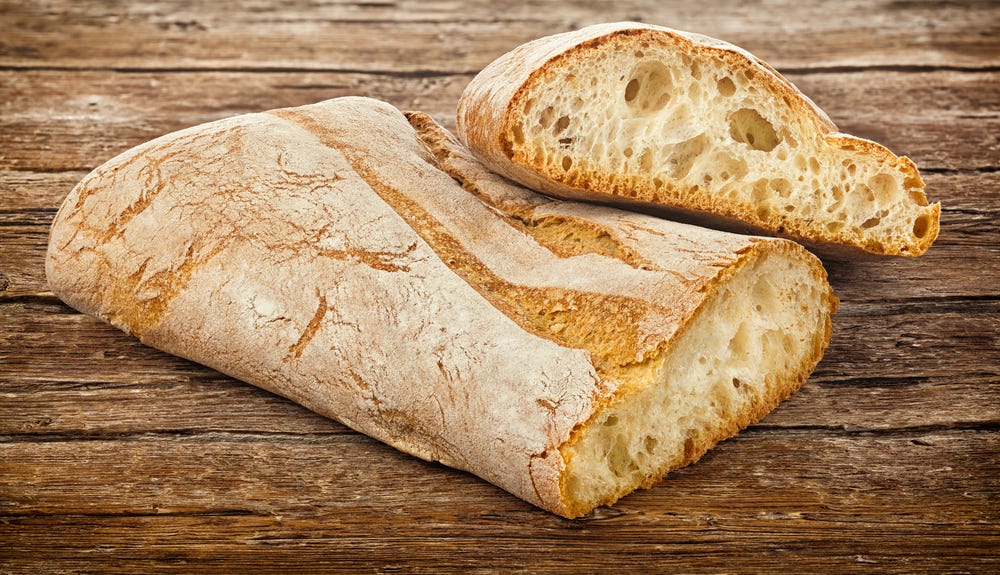
Ciabatta bread is a popular type of bread, but though it looks rustic, with the appearance of bread that originated long ago, it is a relatively new concoction.
Believe it or not, ciabatta bread was first made in 1982 by Arnaldo Cavallari, an Italian baker. Cavallari called the new bread ciabatta polesana after Polesine, the area where he lived, and ciabatta, which means “slipper” in Italian. This is what Cavallari thought the bread resembled.
Cavallari wasn’t just trying to come up with a new bread for no reason. He and other Italian bakers were concerned about the growing popularity of baguettes imported in bulk from France, which were being used to make sandwiches. Cavallari openly admitted he felt the French were “dipping their fingers into Italian pockets.” The baker then set out to develop a commercial alternative.
Cavallari spent weeks testing new dough mixes, bake times, and hydration levels while using his own flour mixture. When he hit on the right mixture, which was a high-hydration dough of around 80% water, he knew he had a perfect bread for sandwiches. This wet and sticky dough couldn’t be shaped into normal round loaves and fell into a flat, chubby shape resembling a slipper, while the high water content gave the baked bread its iconic large air pockets.
Cavallari registered the name ciabatta polesana for the bread, and in 1989, he registered the name ciabatta italiana. By 1999, the names were registered in eleven different countries.
Ciabatta spread quickly, and different regions made slight variations, either with a crispier crust or seasoned with oil or herbs. It then didn’t take long for ciabatta to spread to the rest of Europe. In 1985, the retailer Marks and Spencer began offering it in the United Kingdom, and in 1987, it reached America, specifically Cleveland, Ohio, where three Italian bakers named Sonny, John, and Nick Orlando of the Orlando Baking Company (which dates back to 1872 in Italy before moving to Ohio) developed a way to mass-produce it. This involved a method to freeze the bread after it was freshly baked. From there, ciabatta became available nationwide.
If it weren’t for the French baguette and its proliferation in Italy in 1982, we might never have had ciabatta bread.